Are you a camping enthusiast or an adventurous backpacker? Well, looky here! We’ve got something that will make your outdoor sleeping experience as cozy as a bear in hibernation. Say hello to our best choice for self-inflating sleeping pads – the ultimate option for those who love comfort without compromising on convenience. Today, we’re going to give you our honest review of the inflatable sleeping pad made by KAMUI.
These nifty little contraptions are designed to provide both insulation and cushioning while you catch some Zs under the stars. No more tossing and turning on hard ground or waking up with a stiff back like a robot needing oil.
With a KAMUI self-inflating sleeping pad, you’ll feel like you’re napping on clouds!
Affiliate links are used in this post at no extra cost to you. As an Amazon Associate I earn from qualifying purchases. See my Disclosure and Privacy Policy for more info.
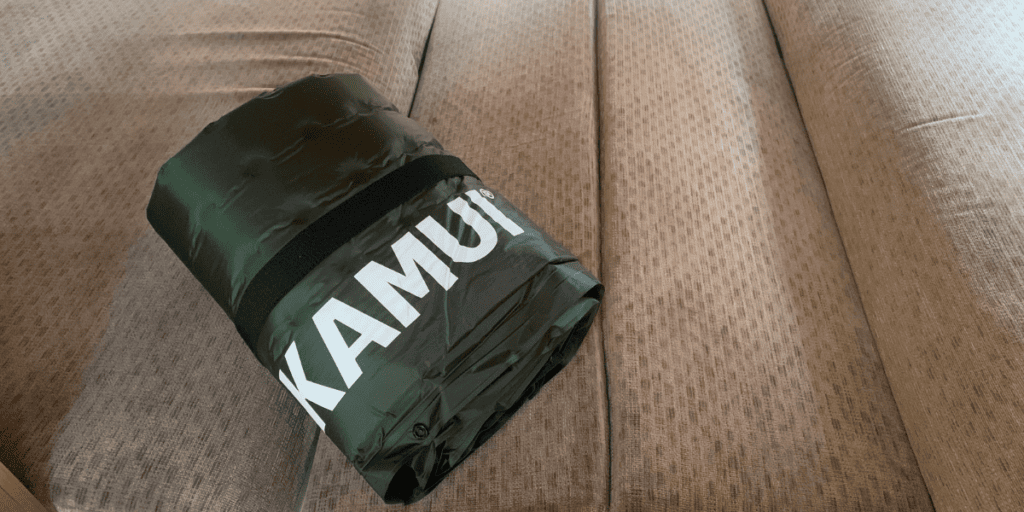
But how do these magical pads work their wonders? It’s simple, really. Just unroll them, open the valve, and watch as they puff up like a marshmallow in a microwave.
The secret lies in their clever design – a clever combination of foam insulation and air chambers that inflate automatically when the valve is opened.
And here’s the best part: these lightweight wonders are easy to pack and carry around. No need to lug around bulky mattresses or spend hours blowing up air mattresses with your lungs (unless you want to sound like Darth Vader).
Just deflate, roll them up, and voila! You’re ready for your next adventure.
So, if you’re tired of sacrificing comfort for portability or battling with inflatable mattresses that seem determined to pop at any given moment, give KAMUI self-inflating sleeping pads a try.
Trust us; your back will thank you!


How Self-Inflating Sleeping Pads Work
Self-inflating sleeping pads have revolutionized the camping experience, providing comfort and convenience for outdoor enthusiasts. But have you ever wondered how these ingenious inventions actually work?
Let’s dive into the fascinating mechanics behind self-inflating sleeping pads.
Utilize Open-Cell Foam Technology for Inflation
At the heart of every self-inflating sleeping pad lies a remarkable material known as open-cell foam. This foam is specially designed with interconnected air pockets that allow it to expand and contract easily.
When you open the valve on the pad, it triggers a chain reaction that sets the inflation process in motion.
Foam Cells Expand When the Valve Is Opened, Drawing in Air
As soon as you open the valve of your self-inflating sleeping pad, a rush of air enters through it. The pressure created by this influx forces the foam cells within the pad to expand rapidly.
These expanding cells act like tiny sponges, drawing in air from outside and capturing it within their structure.
The beauty of this mechanism is that once you close the valve, these foam cells retain the captured air inside them until needed again.
This means that even without any external assistance or additional effort on your part, your sleeping pad will stay inflated throughout the night.
Air Trapped Inside Provides Cushioning and Insulation
The trapped air within the foam cells serves two essential purposes: cushioning and insulation. As you lie down on your self-inflating sleeping pad, those tiny pockets filled with air compress under your weight, creating a comfortable surface to rest upon.
These compressed cells distribute your body weight evenly across the entire mat, minimizing pressure points and ensuring a good night’s sleep.
Moreover, due to its insulating properties, this trapped air helps regulate temperature during chilly nights. It acts as a barrier between you and the cold ground beneath, preventing heat loss and keeping you warm and cozy throughout the night.
Adjust Firmness by Manually Adding or Releasing Air
One of the great advantages of self-inflating sleeping pads is their adjustable firmness. If you prefer a softer surface, simply open the valve and give the pad a few extra puffs of air to increase its inflation.
Materials Used in Self-Inflating Sleeping Pads
Self-inflating sleeping pads are a popular choice among outdoor enthusiasts for their convenience and comfort. These innovative camping accessories are designed to provide cushioning and insulation while being easy to set up and pack away.
Let’s delve into the materials used in the construction of self-inflating sleeping pads to understand how they work their magic.
Durable Polyester Fabric
One of the key components of self-inflating sleeping pads is the outer shell, which is typically made from durable nylon or polyester fabric. (The KUMAI has an outer layering that is made of polyester, making it super simple to clean)
This material is chosen for its ability to resist punctures and abrasions, ensuring that your pad can withstand rough terrains without getting damaged.
The robust outer shell also acts as a protective barrier, shielding the inner foam layer from potential harm.
Inner Foam Layer for Cushioning and Insulation
Beneath the sturdy outer shell lies an inner foam layer that provides both cushioning and insulation properties. This foam layer is responsible for giving you a comfortable surface to sleep on by evenly distributing your body weight across the pad.
It helps insulate your body from the cold ground, preventing heat loss during chilly nights.
The foam used in self-inflating sleeping pads is often open-cell foam, known for its excellent compressibility.
When not inflated, this foam can be compressed tightly, allowing the pad to be rolled up compactly for storage or transportation.
Sturdy Plastic or Metal Valve
To facilitate inflation and deflation, self-inflating sleeping pads are equipped with a valve constructed from sturdy plastic or metal materials. The valve serves as an entry point for air when inflating the pad manually by blowing into it or allowing it to self-inflate when opened.
When you’re ready to pack up camp, simply open the valve again to release the air trapped inside. This feature makes deflating and rolling up your sleeping pad quick and hassle-free, saving you precious time and effort.
Resisting Punctures and Abrasions
Outdoor adventures can be rough, so it’s crucial for self-inflating sleeping pads to withstand the rigors of the wilderness.
This is where the outer layering of the KUMAI sleeping pad stands strong!
Step-by-Step Guide: Using a Self-Inflating Kamui Sleeping Pad
1. Unroll the Sleeping Pad
Start by unrolling your self-inflating sleeping pad on a flat surface inside your tent or wherever you plan to sleep. Make sure there are no sharp objects that could puncture the pad.
2. Open the Valve
Locate the valve on the sleeping pad, usually located at one end. Twist or unscrew the valve to open it. This allows air to enter and inflate the pad.
3. Let It Inflate
Once the valve is open, allow the sleeping pad to inflate naturally. The foam inside will expand as it draws air into its cells. You may hear a slight hissing sound as this happens.
4. Add Extra Air (Optional)
If you prefer a firmer sleeping surface, you can manually inflate the pad further by blowing into the valve. Be careful not to overinflate it, as this can reduce comfort and potentially damage the pad.
5. Close and Secure the Valve
After achieving your desired level of inflation, close and secure the valve tightly to prevent any air from escaping while you sleep.
6. Test for Comfort
Lie down on your self-inflating sleeping pad and test its comfort level before settling in for the night. Adjustments can be made by adding or releasing air until you find an optimal balance between support and cushioning.
7. Deflating and Packing Up
When it’s time to pack up, follow these steps:
- Open the valve again to release all of the trapped air.
- Gently fold or roll up your deflated sleeping pad.
- Apply pressure while rolling to remove any remaining air pockets.
- Once rolled up tightly, fasten any straps or clips provided with your sleeping pad to keep it compact.
- Store your packed sleeping pad in its designated carry bag or backpack.
8. Maintenance Tips
To ensure the longevity of your self-inflating sleeping pad, consider these maintenance tips:
- Avoid placing the pad directly on rough or abrasive surfaces to prevent punctures.
- Clean the surface of the pad regularly with a damp cloth and mild soap.

Comparison: Kamui Self-Inflating Sleeping Pads vs Other Camping Mats
KAMUI self-inflating sleeping pads have gained popularity among campers and outdoor enthusiasts due to their convenience and comfort. But how do they compare to other camping mats? Let’s delve into the details and explore the key differences.
KAMUI Self-Inflating Sleeping Pads
Kamui self-inflating sleeping pads are designed with a unique mechanism that allows them to inflate without the need for an external air pump. When you unroll the pad and open the valve, air rushes into the foam cells, causing it to expand and inflate on its own.
It may take a few minutes for the pad to fully self-inflate, but once it does, you can adjust the firmness by adding or releasing air through the valve.
One of the main advantages of self-inflating sleeping pads is their insulation properties. The foam core provides excellent thermal insulation, keeping you warm even in colder temperatures.
These pads offer superior cushioning and support, making them ideal for those who prioritize comfort during their outdoor adventures.
Foam Camping Mats
Foam camping mats are another option for campers. Unlike self-inflating sleeping pads, these mats require manual inflation using your breath or a separate air pump.
They are typically made from closed-cell foam that offers decent insulation but not as much as self-inflating pads.
Foam camping mats are lightweight and easy to carry, making them suitable for backpacking trips where weight is a concern.
However, they may lack the same level of comfort provided by self-inflating sleeping pads due to their thinner construction. They also take up more room and are not waterproof.
Air Mattresses
Air mattresses are commonly used for car camping or when weight is not an issue. Air mattresses rely on manual inflation using an air pump or by blowing air into the valve. While they offer customizable firmness levels, air mattresses may not provide adequate insulation during colder nights.
Compared to self-inflating sleeping pads, air mattresses are bulkier and take up more space when packed.
They also leak air throughout the night, and are easy to puncture. (I can’t tell you how many times I’ve woken up on a deflated air mattress throughout the night!)
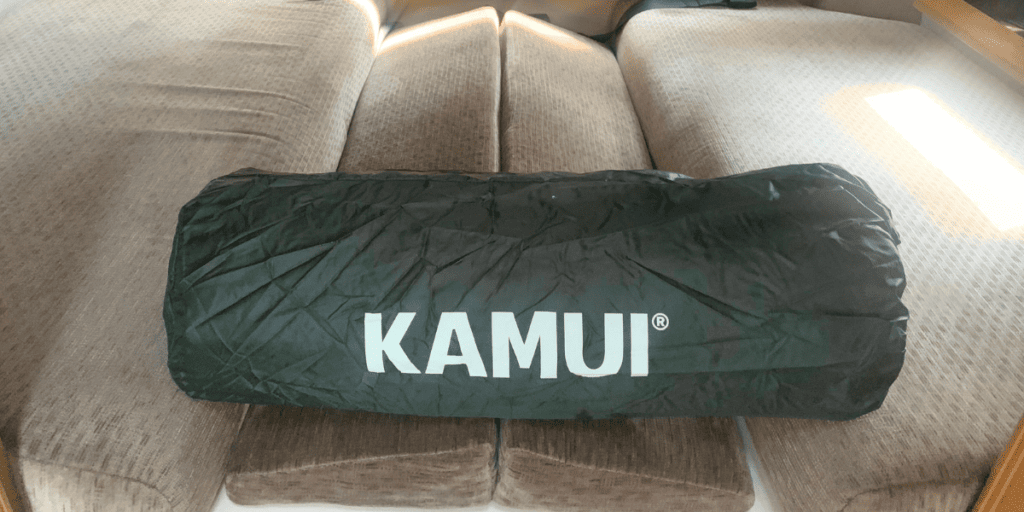
KAMUI Self Inflating Sleeping Pad
If you’re an avid camper or love spending time outdoors, you know the importance of a good night’s sleep.
These innovative pads provide comfort and convenience, allowing you to rest peacefully even in the rugged wilderness.
Let’s take a closer look at how the KAMUI Self Inflating Sleeping Pad works and why it’s a game-changer for outdoor enthusiasts.
How does it work?
The KAMUI Self Inflating Sleeping Pad utilizes a smart design that combines foam insulation with an air valve system. When you first unpack the pad, it may appear flat and deflated.
However, once you open the air valve and allow some air to enter, magic begins to happen. The foam inside the pad expands as it draws in more air, gradually inflating the sleeping pad to its full size.
This sleeping mat comes with a storage bag that makes it easy to pack for your trip. The good news is that self-inflating camping pads like this one are great for tent camping and are so much easier to pack than an air bed or other larger options.
Foam insulation for superior comfort
One of the key components of this self-inflating sleeping pad is its foam insulation. The foam used in KAMUI pads is designed to provide excellent cushioning and support while also insulating your body from cold surfaces. This ensures optimal warmth and comfort throughout the night, even when camping in chilly conditions.
The foam also stands firm throughout the night, making sure that you sleep comfortably all night long.
Easy inflation process
To inflate the KAMUI Self Inflating Sleeping Pad, simply open the air valve and let nature do its job. As air enters through the valve, it fills up the foam cells within the pad, causing them to expand rapidly. You can then manually add extra breaths of air if desired for personalized firmness.
The self-inflation process was a breath of fresh air because it allowed us to work on other aspects of setting up camp rather than having to pump up or deal with airing up a different type of sleep system. (and who wants to pack an air mattress and take up all that extra room?)
Customizable firmness levels
One of the standout features of this sleeping pad is its adjustable firmness levels. By controlling how much air you allow into the pad during inflation, you can easily customize its firmness according to your preferences.
Whether you prefer a softer or firmer sleeping surface, the KAMUI Self Inflating Sleeping Pad can accommodate your needs.
Even though it’s not a thick pad, it’s one of the best sleeping pads because I was able to get it comfortable for how I like to sleep. I’m a side sleeper, so being able to have a self-inflating mattress with a little bit of give during the night is important to me for getting a good night’s sleep.
Compact and portable
Portability is often a top priority. The KAMUI Self Inflating Sleeping Pad excels in this aspect as well. The last thing that you want to have happen is to have self-inflating mats that take up a ton of storage.
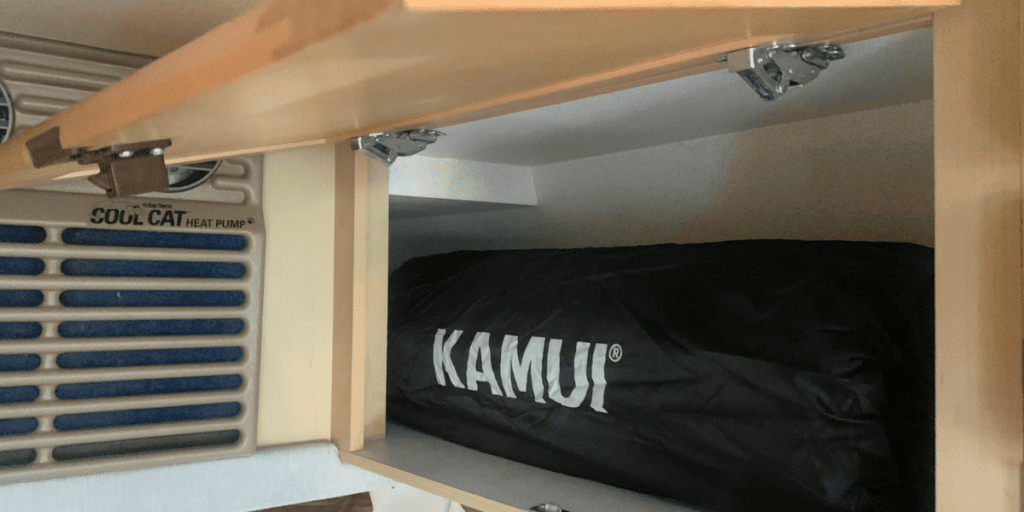
As you can see, we can easily pack this up in a cabinet with plenty of space left over. This is the best choice for our camping needs and gives us the freedom to store it until we need it.
Pros of a Kamui Self-Inflating Sleeping Pad
Inflatable pads are perfect for camping! Side sleepers and back sleepers all agree that this is a great sleeping bad that can easily replace an old mattress or sleeping bag.
In fact, some of the most positive reviews about the Kamui sleeping pad are below:
” … Great for all year around. … “
” … Holds its air & i dont need to add any air during my campouts which are typically 3 nights. … It comes with a nice storage bag that ut fits into easily. … “
” … I am a desert camper and sleep on hard, rocky ground. … They offered great protection on the hard ground and I was able to sleep on my side. … “
” … I like that the materials used to construct the sleeping pads seem to be of high quality and I really like that you can stack them for an even more plush sleeping surface. … “
“I was surprised at how easy this was to use. I followed all the instructions and the recommendations from other purchasers. I use it in my camper van and it always works. Extremely good value for money”.
And those are just a few of the positive reviews! People are recommending this product over thicker pads and love that it’s made using durable materials.
How to Deflate and Pack a Kamui Self-Inflating Sleeping Pad
Self-inflating sleeping pads are a popular choice among campers and outdoor enthusiasts due to their comfort, insulation, and convenience. These pads balance the bulkiness of air mattresses and the minimal cushioning provided by foam mats.
Not only do they provide superior insulation compared to closed-cell foam pads, but they also offer easier setup when compared to manually inflating air pads. However, what truly sets self-inflating sleeping pads apart is their unique self-inflation feature.
Deflating Your Self-Inflating Sleeping Pad
When it’s time to pack up your gear and head back home after an adventurous camping trip, deflating your self-inflating sleeping pad is a straightforward process. Follow these simple steps:
- Open the valve: Locate the valve on your sleeping pad. It is usually located near one corner or along one of the edges. Open the valve by twisting it counterclockwise.
- Roll out excess air: Once the valve is open, begin rolling up the pad from one end towards the other, gently pressing down as you go. This action helps push out any remaining air trapped inside.
- Close the valve: After rolling up your sleeping pad completely, close the valve tightly by twisting it clockwise. This ensures that no air re-enters during packing.
- Fold or compress: Depending on your preference or storage space available, you can either fold your sleeping pad in half or compress it further using compression straps or stuff sacks designed for this purpose.
Give yourself a little extra inflation time to make sure that you get all of the air out. The first time you do this, it’s a good idea to take your time so that the dense foam rolls well and air escapes to be able to fit it back into the bag.
Why we love Kamui Self-Inflating Sleeping Pads
Self-inflating sleeping pads are a game-changer for outdoor enthusiasts. These innovative pads offer a range of benefits that can greatly enhance your camping experience.
Let’s explore some key advantages of using self-inflating sleeping pads.
Light Weight and Portable
Choosing the perfect sleeping pad is an important consideration, so don’t take it lightly. The lighter weight of the KAMUI is great for anyone who doesn’t want to feel bogged down. It’s also a great example of how compressed foam can be used in a comfortable way.
Easy to Clean and store
You don’t have to stress out about cleaning liquids, smores, or anything other type of camping foods that might get spilt on this. The outer covering is waterproof, and it was a breeze to just wipe clean.
Fast to Set Up
In just a few minutes, the pad was ready to use. This worked great for having a comfy place to lay down, after a long day of travel or exploring the wild.
As you can see, our reviews are that the KUMAI sleeping pad is a must. It’s perfect for anyone who needs a comfortable option for sleeping, without having to break the bank.
This can also be used for sleepovers at the house, as a quick and easy extra bed for the kids to lay on. There are many options on how to use this pad!
Purchase the KUMAI Sleeping Pad here
How do I clean my self-inflating sleeping pad?
To clean your KAMUI self-inflating sleeping pad, start by wiping away any dirt or debris with a damp cloth. For tougher stains or odors, use mild soap mixed with water and gently scrub the affected areas using a soft brush or sponge.
Rinse thoroughly with clean water and allow it to air dry before packing it away.
Can I use my self-inflating sleeping pad in cold weather?
Yes! Self-inflating sleeping pads provide insulation from the cold ground thanks to their foam core construction.
How do I store my self-inflating sleeping pad?
To store your self-inflating sleeping pad, make sure it is clean and dry before rolling it up tightly, starting from the opposite end of the valve.
Secure it with the provided straps or a separate compression sack to minimize its size and protect it from damage during transportation.
Can I use a self-inflating sleeping pad for activities other than camping?
Absolutely! Self-inflating sleeping pads are versatile and can be used for various activities such as backpacking, hiking, mountaineering, and even as an extra mattress for guests at home.
Their compactness and ease of use make them a convenient choice for any situation where comfort on-the-go is desired.
How long do self-inflating sleeping pads typically last?
The lifespan of a self-inflating sleeping pad depends on various factors such as frequency of use, care, and quality of construction.
With proper maintenance and regular cleaning, a high-quality self-inflating sleeping pad can last anywhere from several years to over a decade.
Leave a Reply