Do you have a pop up camper? If so, you need to make sure you have the right battery for it. Pop up campers require a deep cycle battery, which is specifically designed for use in recreational vehicles.
In this blog post, we will discuss everything you need to know about pop up camper batteries! We will talk about what kind of battery to buy, how to maintain it, and more!

Pop up campers are a great way to enjoy the outdoors without having to rough it. They provide all the comforts of home but can be easily packed up and transported to your favorite camping spot.
If you are in the market for a new pop up camper battery, there are a few things you need to keep in mind. Before launching on your next camping trip, take the time to educate yourself on the best RV batteries for your travels. There are ways to find batteries at an affordable price!
What kind of battery goes in a pop up camper?
You’re going to want a deep cycle battery so that you can have longer battery life. These types of batteries are made to withstand repeated deep discharge cycles. Pop up campers require a deep cycle battery in order to operate properly. Deep cycle batteries are designed for use in recreational vehicles and are made to withstand repeated deep discharge cycles.
There are two main types of batteries that are used in pop up campers: lead-acid batteries and lithium-ion batteries. Lead-acid batteries tend to be more affordable but they’re also heavier and require more maintenance.
Lithium-ion batteries are newer and gaining in popularity because they’re lighter and have a longer lifespan, but they do cost more money. These are important to know more about when choosing a battery for pop up camper.

How Does The Battery Charge On A Pop up Camper?
The battery on a pop up camper is charged in two ways: through the use of a generator or by being connected to an external power source. Pop up campers that are equipped with generators will have a charging system that kicks in automatically when the generator is running.
Pop up campers that are not equipped with generators will need to be plugged into an external power source in order to charge the battery.
Can I Plug In My Camper Without A Battery?
Yes, you can plug in your camper without a battery. Pop up campers that are plugged into an external power source will not need a battery to operate. However, it is always a good idea to have a backup battery on hand in case of an emergency.
Now that you know what kind of battery to buy, it’s time to learn how to take care of it! Pop up camper batteries need to be regularly checked and cleaned.
The terminals should be free of corrosion, and the battery should be kept in a cool, dry place. Pop-up camper batteries should be replaced every three to five years.
What Size Battery Should I Buy?
The size of the battery you need will depend on the amenities your pop up camper has. Pop up campers that have more electrical appliances will require a larger battery.
Be sure to consult the manufacturer’s instructions to determine the size of battery you need.
You also need to be sure that your popup camper has the capability to have a battery installed. Some do – and some don’t!
Can you use a car battery for a pop-up camper?
It is not recommended. You need to use a battery that is made for campers/RVs for the best results.
It’s recommended that you purchase a separate battery charger to ensure that the voltage is properly regulated.
What is the Difference Between a Lead Acid Battery and a Lithium Ion Battery?
Lead acid batteries are the most common type of battery used in pop up campers. They are more affordable than lithium-ion batteries, but they are also heavier and require more maintenance.
Lithium-ion batteries are newer on the market and are becoming more popular in pop up campers. They are lighter than lead-acid batteries and have a longer lifespan. However, they are more expensive than lead-acid batteries.

What is a Deep Cycle Battery and Why It Matters
Deep cycle batteries are designed for use in recreational vehicles and are made to withstand repeated deep discharge cycles. Pop up campers require a deep cycle battery in order to operate properly.
Deep cycle batteries are more expensive than regular lead-acid batteries, but they will last longer and provide more power.
How Long Do Popup Camper Batteries Last?
Pop up camper batteries should be regularly checked and replaced every three to five years. With proper care, your pop up camper battery will last for many years!
Best Deep Cycle Battery For RV: Pop Up Camper
When choosing a deep cycle battery for your pop up camper, be sure to consult the manufacturer’s instructions.
There are many different types and sizes of batteries on the market, so it is important to choose the one that is right for your needs.
Be sure to purchase a deep cycle battery from a reputable dealer so that you can be sure it will provide the power you need.
The following are OPTIONS but may not be the right fit for your popup camper. Talk to the dealership or the manufacturer before adding. It’s always best to ask professionals about the best battery for pop up camper.
Affiliate links are used in this post at no extra cost to you. As an Amazon Associate I earn from qualifying purchases. See my Disclosure and Privacy Policy for more info.
Interstate Batteries 12V 35AH Sealed Lead Acid AGM Deep Cycle Battery
This is one of the best deep cycle batteries under $150 because of its simple installation, high cycle rating, and compact footprint.
Keep in mind that a lower price point means that you’re going to have a lower amp hour battery. This battery has a small 35 Ah capacity so it will not last very long.


Pros:
- Simple installation
- Lightweight
Cons:
- Won’t last very long
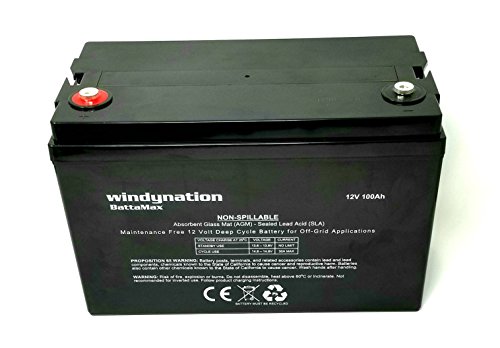
WindyNation 100AH 12V AGM Deep Cycle Sealed Lead Acid Battery
For a price point of less than $250, this 12V deep cycle lead-acid battery is a great choice. It comes with a great no-leak design and if taken care of and maintained, it can last for up to 12 years.
Pros:
- No-leak
- Can last up to 12 years
Cons:
- Takes knowledge to be able to install
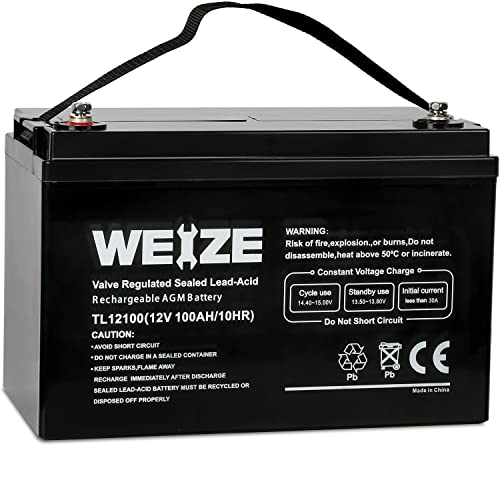
Weize 12V 100AH Deep Cycle AGM SLA VRLA Battery
Choosing the deep cycle RV battery will give you 100 Ah, which will be able to charge multiple appliances while camping. The battery also charges quickly, which is nice to be able to charge and get on the road.
The easy installation is perfect for all levels to install but you will need to get some mounting gear to hold it into place.
Pros:
- Charges quickly
- Good for a variety of weather and climate
- Easy to install
Cons:
- Doesn’t include mounting equipment
- Limited to 100 Ah
What size deep cycle battery should I purchase?
The size of deep cycle batteries will vary. You do need to find a tent trailer battery that will fit your camper and will also power all your needs.
The larger that you go in terms of deep cycle battery sizes, the more that you need to pay very close attention to where you’re going to place the battery to be sure that it’s going to fit.

how long will battery last dry camping?
The duration a battery will last while dry camping depends on several factors, including the type and capacity of the battery, the power consumption of your devices, and how efficiently you manage your energy use. Here are some general guidelines:
- Battery Type and Capacity:
- A typical deep-cycle RV battery might have a capacity of around 100 amp-hours (Ah).
- Lithium batteries generally last longer and can be discharged more deeply than lead-acid batteries.
- Power Consumption:
- Calculate the total power consumption of your devices in amp-hours. For example, if you use 20 Ah per day, a 100 Ah battery could last about 5 days without recharging.
- Energy Management:
- Use energy-efficient appliances and LED lighting.
- Minimize the use of high-power devices like air conditioners or microwaves.
- Recharging Options:
- Consider solar panels or a generator to recharge your battery during your trip.
By assessing these factors, you can estimate how long your battery will last while dry camping.
Why Does My Camper Battery Keep Dying?
There are several reasons why your pop up camper battery may keep dying. First, check to see if the battery is properly charged.
Second, check the connections to make sure they are clean and tight.
Third, check for any loose wires that may be causing a short circuit.
Finally, consult the manufacturer’s instructions to see if there are any other troubleshooting tips.
You also may be overusing the battery. If you’re constantly dealing with a dead battery, this may be proof that you’re appliances are using more energy than you thought. Having a reliable battery while camping is key!
You should also call and ask a professional and ask them “why does my rv battery keep dying?” – and get their professional opinion.
What Color Wire Is Positive On a Camper?
You need to reference the camper manual as well as the battery manual to be sure.
Never mess with anything electrical if you’re not 100%.
How long does 12V battery last on popup camper?
With medium use on the battery, a 12-volt battery should last 2-3 days. You may be able to get longer out of the battery, but that just depends on how much you’re actually using it. Every time you use the pump, turn on a light, use an appliance – all of that is pulling battery power.
If you can go without using power for periods of time while camping, this will help your battery last that much longer.

How long does it take to charge 2 RV batteries?
The size of the batteries can cause this to vary but the following is pretty accurate:
| 12 volt (group 24 battery) | 140 minutes when using 25 amps |
| 12 volt (group 27 battery) | 175 minutes when using 25 amps |
| 12-volt battery (group 31 battery) | 15 min when using 25 amps |
| (2) 6 volt batteries | 440 min when using 25 amps |
Can you overcharge a deep cycle battery?
You can. Just like anything plugged in, you don’t need to have it charging all the time.
Unplugging and using your battery and then recharging it will help with the battery life and save it from having battery damage.
Does the RV generator charge the batteries?
You bet! This is one of those battery basics that are important to know. If you have a generator, this will charge the RV battery!

Purchasing a Pop Up Camper Battery
When purchasing a pop up camper battery, be sure to consult the manufacturer’s instructions. There are many different types and sizes of batteries on the market, so it is important to choose the one that is right for your needs.
You can find the perfect battery for pop up camping with just a little bit of research. Start with figuring out your base price and how much battery usage you’re going to have, and then make the purchase so that you can make dry camping happen without the worry of not having electricity.
Take your time to do a little research so that you find the best new battery to use with your camper. You want to make sure that you have enough power and a good battery for everything that you want to do.
Do Pop Up Campers Have Solar Panels?
Some pop up campers are equipped with solar panels. Solar panels are a great way to keep the battery charged while camping. Pop up campers that have solar panels will have a charging system that kicks in automatically when the sun is out.
They can do a great job when it comes to your specific needs, so be sure that you learn about the best option for the charging process.
Can I use a regular car battery for my camper?
No, I don’t recommend it. This is because a car battery is not the same as a true deep cycle battery. A car battery tends to provide a surge of watts of power while a deep cell battery system gives power over the entire course of use. This is important to know and remember – there is a difference.



Be sure to purchase the right type of battery for your pop up camper and follow the manufacturer’s instructions for care and maintenance. With proper care, your pop up camper battery will last for many years!
what size battery do i need for my camper?
The size of the battery you need for your camper depends on several factors, including your power usage, the duration of your trips, and whether you have access to recharging options like solar panels or a generator.
how long will an rv battery last without being plugged in?
The duration an RV battery will last without being plugged in depends on several factors, including the battery’s capacity, the type of battery, and your power consumption. Here’s a general overview:
- Battery Capacity:
- A typical deep-cycle RV battery might have a capacity of around 100 amp-hours (Ah).
- Power Consumption:
- Calculate the total power consumption of your devices in amp-hours. For example, if you use 20 Ah per day, a 100 Ah battery could last about 5 days without recharging.
- Battery Type:
- Lead-Acid Batteries: These should not be discharged below 50% to maintain their lifespan, effectively giving you 50 Ah of usable capacity from a 100 Ah battery.
- Lithium Batteries: These can be discharged more deeply (up to 80-90%), providing more usable capacity.
- Energy Management:
- Use energy-efficient appliances and LED lighting.
- Minimize the use of high-power devices like air conditioners or microwaves.
- Environmental Factors:
- Cold temperatures can reduce battery efficiency and capacity.
Considering these factors, you can estimate how long your RV battery will last without being plugged in. For precise planning, monitoring your actual power usage and adjusting your energy consumption accordingly is helpful.
how long do rv batteries last?
The lifespan of RV batteries can vary significantly based on the type of battery, how well they are maintained, and how frequently they are used.
Leave a Reply