Tents are great because they provide shelter from rain or snow. Even though tents are perfect for providing shelter, there are a few things to do to keep the moisture out of your tent. Learn how to keep your tent dry inside with these tips!
You’ve probably spent lots of time outdoors enjoying nature, camping, hiking, fishing, hunting, etc., but sometimes tents get wet. Fortunately, you don’t need to go out and purchase expensive gear to keep your tent dry.
Are you ready to learn how to not let rainy weather or moisture ruin your trip?
Here’s how to keep a dry tent on your next camping trip. Tent condensation or rainy weather doesn’t have to ruin your camping plans!
Affiliate links are used in this post at no extra cost to you. As an Amazon Associate I earn from qualifying purchases. See my Disclosure and Privacy Policy for more info.
How to stop condensation in tents?
Condensation happens when there’s a temperature difference between two surfaces, like your tent wall and the air outside.
When you’re sleeping, your body heat rises and cools the air around you. This causes moisture to form on the cooler surface (the tent) and evaporate into the warmer air above. The result is condensation.
How to keep your tent dry?
There are several things you can do to help prevent condensation. First, try to avoid sleeping directly against the walls of your tent. Instead, sleep on the floor of your tent, which will allow more airflow.
Also, if possible, place your tent away from trees and other objects that might block wind flow.
Finally, consider adding insulation to your tent. Insulation keeps the air inside warm, preventing it from cooling down as much. Having an insulated blanket to use is a simple option.
If you live in a cold climate, you may be able to reduce condensation by keeping your tent ventilated. You should also make sure your tent is well-insulated so that it cuts down on the moisture in the air.
Quick tips for a dry camping experience
- When you sleep in a wet tent, you could wake up feeling like you’re sleeping in an ice box.
- Open the vents on your tent door before you go to bed.
- Pick a suitable camping spot. Choose an area where there will be less wind and humidity.
- Minimize the sources that add moisture or humidity to the tent.

How Keep the Inside of Your Tent Dry
Tent camping is a great way to get away from it all and enjoy nature. However, one thing that can ruin your trip is getting wet inside your tent.
Luckily, there are some simple tips that you can do to reduce moisture in your tent.
Choose a good location
Find a dry location that is sheltered from the elements. Remeber that anything on the ground is going to probably come up through the bottom of your tent.
Avoid condensation build up by venting
If there are vents on the tent, open them during the day to let the hot air and humidity have a place to go.
Make sure that you ventalate the tent during the day. This will release humidity and help keep the condensation out of your tent.
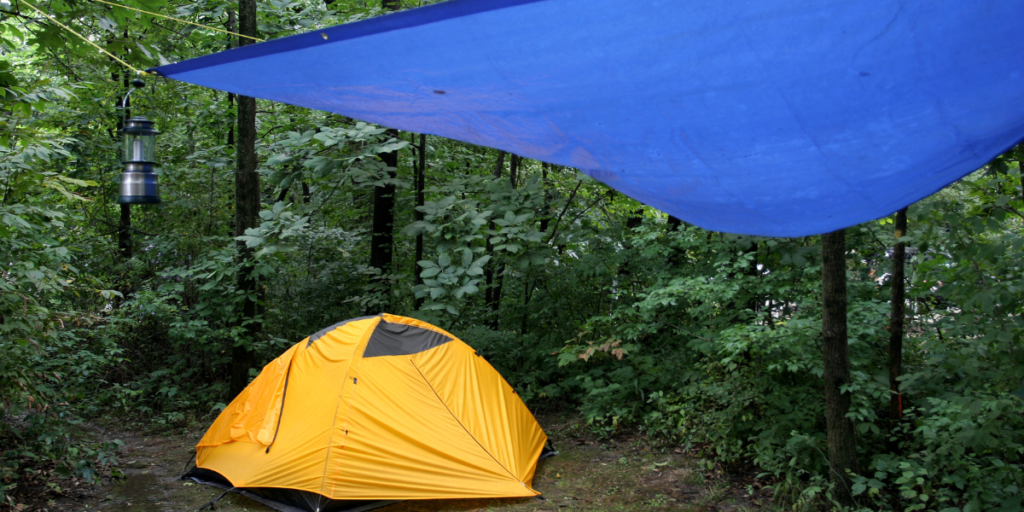
Use a rain tarp
A rain tarp is great for adding an extra layer of protection to your tent to keep it as dry as possible.
Raising the tarp over your tent keeps the inside dry and limits condensation. A tarp gives you an extra layer of protection against heavy rains and snow.
A tarp shelter can provide protection from rain while still allowing you to cook, pitch a tent, hang out, etc.
This also keeps wetness and moisture out of the tent so that it doesn’t create humidity and condensation.
Extend your porch
If you have a porch off the front or side of your tent, try and extend it out so that it’s away from the rest of the tent.
Use a groundsheet
This is perfect for keeping moisture at bay and helping with the colder air on the ground.
Leave your boots and wet gear at the door
Anything wet needs to be kept close to the door or outside! Leave camping gear at the door.
Don’t spill anything
You’d be amazed at how spills can quickly make the inside of your tent a mess.
Dry your tent out during the day
If the weather is nice during the day, open up the tent to make sure that it’s as dry as possible.

Quick Tips for Keeping the inside of your tent dry
- Make sure all vents are open
- Put your boots by the opening
- Don’t have wet objects inside the tent
- Pitch your tent in a good location
Buy a tent with breathable fabric
A good tent should be able to keep you dry and warm, but it also needs to breathe well so that your body doesn’t overheat in the heat of summer or freeze in winter.
A breathable tent is one that allows air to flow through its walls and roof, keeping you comfortable even when temperatures drop below freezing.
Tents come in different sizes and shapes, but they all have three parts: a frame, a waterproof shell, and a fly. The fly is usually made of nylon or polyester material, while the rest of the tent is usually made of ripstop nylon or cotton canvas.
The most important part of a tent is the fly because this is what lets air in and out. It has to be strong enough to support the weight of the tent yet flexible enough to let air pass through.
If the fly isn’t breathable, then it won’t let any air in or out. And since the fly is exposed to the elements, it gets dirty very quickly. That means you need to wash it regularly.
To find a breathable tent, look for one that has mesh windows along the sides. These windows let air into the tent, but they don’t let water in. They also let light in, which helps you stay awake. Mesh windows are found on many lightweight tents.
If you want a tent that is both durable and easy to set up, choose a model with a pole design. This type of tent uses poles instead of guy ropes to hold the structure together. You can easily assemble these tents without tools.
If you plan to camp in cold weather, make sure your tent has a draft tube. Draft tubes are small holes near the top of the tent that let air in. These holes are designed to let air escape from the tent so that you don’t feel too hot or too cold.

Quick Tips about choosing a Tent
- Water vapor turns into a liquid when there is no place to escape, which makes the air inside the tent humid.
- A tent with breathable fabric will help prevent condensation.
- There are many different kinds of fabrics that can be used to make a tent breathable.
Tips for Selecting a Tent
- A waterproof tent is essential if you plan to camp in wet conditions.
- Be sure to ask questions before buying a tent. Don’t just assume it’s waterproof.
Tent Set-Up
- Setting up a tent isn’t hard to do but there are a few things to keep in mind.
- Always look for a drier camping spot before pitching a tent.
- A good way to protect yourself from wet tents is to use a large tarp.
- Do not pitch a tent near rivers, lakes, or oceans. Water levels can change unexpectedly.
- Make sure there’s enough ventilation inside the tent and also vents inside the tent to let out any excess moisture.
- Keep the tent clean and dry.

What is the best tent for avoiding condensation?
Now that you know tips and details on how to stay dry when camping, let’s talk about tent options!
Single-wall tents
Single-wall tents are lightweight and easy to set up. They’re perfect for packing and setting up quickly and they’re made to let air circulate easily.
Since they’re single-wall, you will want to pack sleeping bags or blankets to make sure that you stay nice and warm.
However, these tents help keep the interior dryer than double wall tents and are lighter than double-wall tents as well.
Double-wall tents
Double walled tents help prevent condensation and reduce the amount of ventilation required. These types of tents are suited for hot climates and are great for keeping humidity out of the tent.
Leave a Reply